


May 12, 2023
Another look at Thor: Love and Thunder (2022), this week’s movie review.
I can’t recommend this film, but I certainly can comment on it, because it treads on the domains of life, death and life again — and it’s all very interesting. My lack of a recommendation doesn’t mean you shouldn’t try it for the first time, or again, and see if you agree with what I’m going on about.
For one: This film wants to be more funny than philosophical, and accomplishes that in spades — but with a surprising amount of philosophy thrown in anyway.
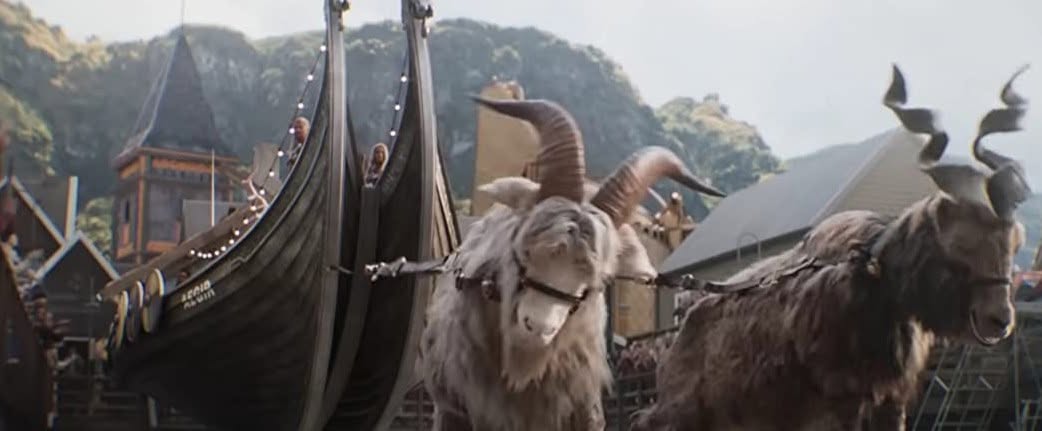
I’m sure you’ve heard that this movie a parody of all Avenger films, and that it is — and it can be howlingly funny. Two words: Screaming goats.
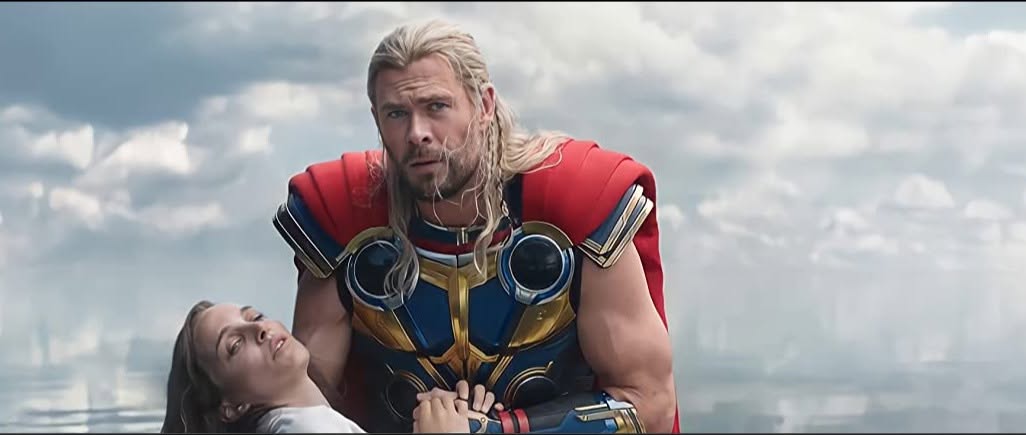
And isn’t all good parody somewhat philosophical anyway? The film is packed with parody, funny and philosophy, plus grit, and that may just be too much for fun. Oh, and Thor’s girlfriend from earth plays a key role, taking a bullet for the team. Yes, it’s packed.
Two: On a more serious note :
There aren’t lots of movies where one sympathizes with the antagonist, but in Thor, Love and Thunder, a case can be made. Themes of life, death, eternity and the lack of divine reward are the undercurrent quite central to the story, taking advantage of our real everyday human curiosities about eternal life. Not a lot of direct answers are given in this story, so it’s up to us to fill in the blanks.
And part of that process is a litany of very angry accusations against the capricious cruelties of “the gods” which are angrily recounted to us — as well they should be. Eternity and the god’s divine power get a bad — and much deserved rap. There is spiritual instruction, and a surprising one, right there.
As a result:
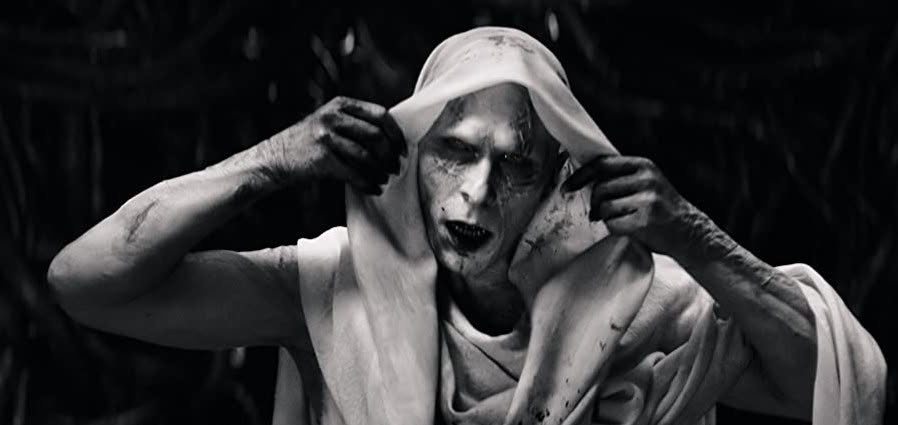
A sort-of nihilistic anti-hero in the form of a wronged mortal (Gorr) comes forward, who has stumbled upon the hammer of the gods - a "god killer" to wreak his vengeance. Then this mortal is told by the self-obsessed god Dionysius, “There is no eternal life for you. Only death.”
Too bad for arrogant Dionysius, because Gor holds the weapon to defeat him for good — and all the other false gods. So, our anti-hero Gorr goes after them, and thus the plot is revealed.
Di soon gets a taste of his own medicine from Gorr, and there was no spoonful of sugar involved.
It also leads to one of the more curious comic con-like conventions in some time/space dimension where all the “gods” have come together. This is not out of concern, but to throw a big party where the gods are bawdy and bad. Oh, those degenerate gods.
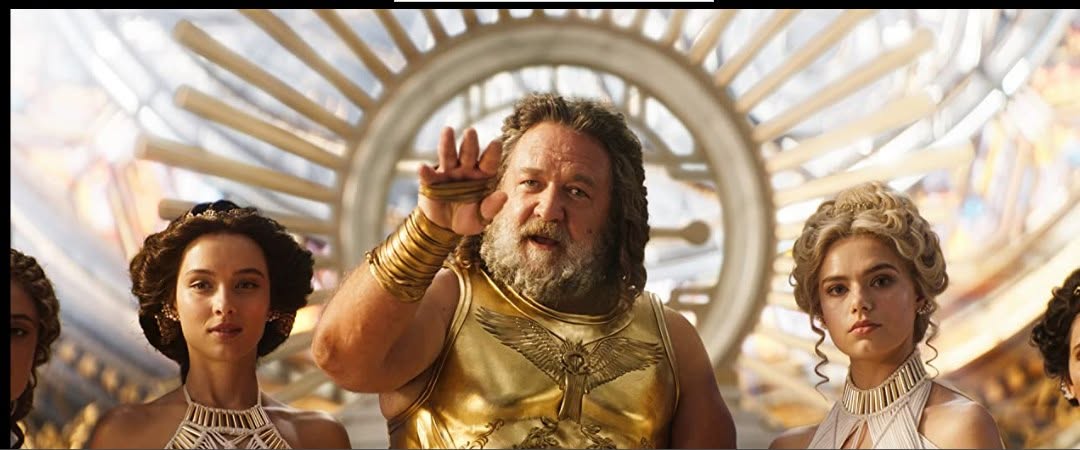
Thor rains on this parade by being way too serious and appealing to them all for action, especially to the lead god, Zeus, whom Thor admires.
Zeus is unimpressed and echos Dionysius, which makes Thor finally realize Zeus is not such a good god after all. Never meet your heros.
Thor and his buddies then take on all of the gods in a rock ‘em sock ‘em spectacular which emulates his wowie-effects battle against Hulk and Jeff Goldblum’s “Grandmaster” in a previous film, Thor: Ragnarok (2017).
All seriousness disappears from Love and Thunder at this point as we take in all the special effects, and many there are for everyone’s popcorn enjoyment
But does all this sound somewhat familiar with today’s believers who have read that their “struggle is not against flesh and blood, but against the rulers, against the authorities, against the powers of this dark world and against the spiritual forces of evil in the heavenly places.” ? And here they all are for us to imagine.
The gritty mortal (who is horribly disfigured as time goes by) wanders about, seeking and destroying these arrogant “gods” and, one can’t help feeling, well, a sort of solidarity with him — that is until he sets his eyes on Thor, and since Thor is our hero, we can’t have that can we? Thus, the analogy ends.
The serious note: Eternal life
Back to Dionysius’s crucial comment to all of us mortals that “there is no eternal life for you. Only death.” This is where many people today seem to reside mentally. “Once the lights go out, that’s it,” is what they believe. One of my own relatives has told me this. And it’s a very sad outlook isn’t it?
But people don’t really die in these Marvel - ous Asgardian adventures. Loki, Thor’s adopted brother, keeps coming back. Heimdall, the keeper of the BiFrost ends up in Valhalla along with a number of beloved characters. Thanos is defeated and billions of dead people all over earth he killed come back to life in “the blip.” Time is used to bring people back to life. Comforting.
Not everyone makes it, mind you, but what viewer identifies with them, the lost? Everyone today hopes for some kind of afterlife. the movie says “We all come back in the blip”, hopefully, but believers say it’s so much better than that in reality.
Even Tom Cruise gets in the act with Live, Die, Repeat. People get a “do-over.” It’s a very common theme in movies and video games. We don’t die. Not really. What if there were a shadow of truth in it? Even more than a shadow, a rock-solid reality? Not a "do-over" but not a final death, either.
The point is, themes of eternal life are embedded in today’s films, even in the midst of current, general dis-belief in it. Many can’t live with the idea that “when it’s over, it’s over.” Many would say there is a reason for that.
What is that?
The biblical universe view indicates we are created in the image of a living, loving God and eternity is written on the heart of mortals. That’s why we sense life everlasting. And Thor — literally at the gates of eternity, finally sees the light in the midst of defeat and says “I chose love,” another metaphor, if you will, of choosing the great “I AM” who is love, vs. the worldly Dionysius and his ilk.
“Good on ‘ya, Thor” as the Aussies might say. “Well done”. Evidently the film makers think that is the path we should all choose, and thinks the mass viewing audience will agree.
I, for one, hope they do. And reflect on “false gods” that reject love, and search for the one that embraces and embodies it as they enter eternity.
Thor, Chris Hemsworth. Jane Foster, Natalie Portman. Russell Crowe, Zeus. Gorr, Christian Bale. Korg, Taika Watiti, who also directs. And a host of others making cameo appearances for brief moments. 2 Hrs, (including the credits).